The Clubs Remember What History Forgot: Notting Hill's Unsolved Murders
The clubs remember what history forgot: Notting Hill's unsolved murders from the 1960s. Five women's deaths reveal a hidden chapter of the neighbourhood's history
12/5/20255 min read
Lives Lived Locally
Hannah Tailford lived in Pembridge Villas, just south of Notting Hill Gate. Helen Barthelemy was known to frequent the Jazz Club on Westbourne Park Road, one of the many late-night venues that made up the neighbourhood's informal economy in the early 1960s. Mary Fleming, known locally as "Gummy Mary," lived at 44 Lancaster Road and was last seen at Roy Stewart's gymnasium on Powis Square, which also operated as an unlicensed drinking club. Frances Brown had lived on Westbourne Park Road and spent her last known evening at the Warwick Castle pub (now The Castle), 225 Portobello Road. Bridget O'Hara was last seen near Holland Park before her body was found in North Acton.
These addresses matter. They tell us that these women were not strangers passing through. They were neighbours. They used the same streets, the same buses, the same corner shops as everyone else in North Kensington. Their work—sex work, often driven by economic necessity—brought them into the network of clubs, shebeens and late-night drinkers that formed the social infrastructure of 1960s Notting Hill.
The Landscape of Vulnerability
The Notting Hill these women knew was a neighbourhood marked by overcrowding, exploitative landlords and limited options for working-class women. The clubs and unlicensed drinking venues along Westbourne Park Road, around Powis Square and down Lancaster Road served multiple purposes: they were social spaces, meeting points and places of relative safety in a community that offered few protections to women working on the margins.
The same venues that hosted music, dancing and community gathering also became the last places several murder victims were seen alive. The Jazz Club on Westbourne Park Road, opened by Trinidadian entrepreneur Larry Ford around 1961, was one such place. Roy Stewart's gymnasium on Powis Square was another. Stewart, a Jamaican-born actor and stuntman who also ran The Globe club on Talbot Road, had opened his gym in 1954 with a policy of welcoming all races. The basement space doubled as an unlicensed drinking club and by 1964 Stewart had been convicted four times for selling liquor without a licence. These were not sinister locations in themselves; they were simply part of the everyday landscape of North Kensington nightlife, woven into the fabric of survival and community in a neighbourhood where formal institutions often failed to serve the most vulnerable residents.
What Went Unsolved
Between February 1964 and February 1965, six women were killed in rapid succession. All were involved in sex work. All were found stripped of their clothing, strangled or suffocated, their bodies dumped in locations across West London—Brentford, Chiswick, Acton. Several had their front teeth removed. Forensic investigators found microscopic paint specks on some of the bodies, suggesting the women had been held in an industrial location before being killed.
Scotland Yard launched a massive investigation. Detectives interviewed thousands of men who worked in the industrial estates and spray-paint shops of West London. The investigation narrowed its focus, and the killings stopped abruptly in early 1965 after police publicly announced progress in identifying suspects. But no charges were ever brought. No one was convicted. The case remains officially unsolved.
Geographic profiling work conducted decades later by criminologist Kim Rossmo suggested that the killer almost certainly lived or worked within a tight corridor between Hammersmith and Notting Hill. The victims' movements—from their homes in Pembridge Villas and Lancaster Road to clubs on Westbourne Park Road and pubs on Portobello Road—all fell within a compact area. The women knew this patch of West London intimately. It appears their killer did too.
Why This History Matters
It would be easier to tell Notting Hill's story without this chapter. The neighbourhood's heritage tourism often focuses on Carnival, the Windrush generation, Portobello Market's antiques and the grand terraces around Notting Hill Gate. These are important stories, and they deserve to be told. But a community's history is not only its moments of celebration and resilience. It is also its moments of loss, its failures of protection, its silences.
The women who were killed between 1959 and 1965 were part of this neighbourhood. Five of them lived here, worked here, or were last seen in Notting Hill's clubs and streets. Their murders exposed the precarity that many women faced in 1960s Notting Hill—poor housing, limited economic options, and a police force that too often viewed sex workers as problems rather than people deserving protection. The fact that these murders remain unsolved, that the case generated sensational headlines but no justice, tells us something about whose lives were considered valuable and whose deaths warranted sustained attention.
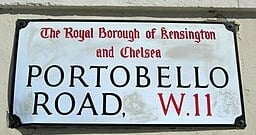
When we walk along Lancaster Road or The Castle pub on Portobello Road (formerly the Warwick Castle), we are walking through a landscape that holds difficult memories alongside joyful ones. This is what it means to engage honestly with a place's past.
Remembering with Dignity
There is no memorial plaque for Hannah Tailford, Helen Barthelemy, Mary Fleming, Frances Brown or Bridget O'Hara. But they were here. They lived in these streets, used these clubs, walked these pavements. They were young women navigating a neighbourhood that offered them both community and danger, opportunity and profound vulnerability.
Remembering them does not require us to sensationalise their deaths or indulge in the macabre fascination that often surrounds unsolved murders. It requires us to acknowledge that they existed, that their lives had value, and that the circumstances which made them vulnerable—poverty, housing insecurity, the criminalisation and stigmatisation of sex work—are questions of social justice, not just criminal investigation.
Notting Hill's history is richer and more complex when we include these difficult chapters. The neighbourhood we know today was shaped not only by Carnival, migration and resistance, but also by loss, by violence that went unanswered, by women whose names have largely been forgotten. To walk these streets with honesty is to hold all of that history together—the joy and the grief, the celebration and the silence, the stories we tell easily and the ones that require us to pause and reflect on what a community owes to its most vulnerable members.
The details in this post are drawn from contemporary police records, local history research and later criminological analysis. If you have memories or family stories connected to this period in Notting Hill's history, I welcome the opportunity to listen and learn.
Walk This History: The Frontline
The clubs, shebeens and streets mentioned in this post—Roy Stewart's gymnasium at Powis Square, the Jazz Club on Westbourne Park Road, The Castle pub on Portobello Road—are all stops on The Frontline: Black Shebeens & Resistance in Notting Hill, launching February 2025.
This walk explores the Caribbean club scene of 1960s Notting Hill as a space of both community building and vulnerability, joy and danger. We examine how Black-owned venues operated under constant police surveillance, how women navigated these spaces, and how the neighbourhood's informal economy served people the mainstream excluded.
The Frontline walk centres dignity and community voices, not sensationalism. We tell the full story of Notting Hill's Caribbean heritage—the resistance and the risks, the celebration and the losses that shaped this neighbourhood.
Join the Waitlist
Early bird tickets: £7.50 (regular price £15-20)
Bookings open February 2025
Join the waitlist for The Frontline walk →
Discover Authentic Caribbean Heritage in Notting Hill
At Notting Hill Walks, we tell the stories guidebooks leave out. Our Caribbean heritage tours are led by guides who centre community voices and rigorous historical research. From the Windrush generation to Notting Hill Carnival, from shebeens to resistance—we explore the real history of Black British life in West London.
Related walk: Notting Hill Caribbean Heritage Walk
Contact
QUESTIONS? REACH OUT ANYTIME
hello@nottinghillwalks.co.uk
© 2025. All rights reserved.
Partners



Notting Hill Walks is part of More Curricular alongside Hidden Tudors Tours