Caribbean Clubs Notting Hill: The Blue Moon and The Americano in the 1960s
Discover Caribbean clubs Notting Hill in the 1960s: The Blue Moon, The Americano and shebeens. The hidden history of Black British resistance, survival and community.
11/27/20254 min read
The Blue Moon: Where Notting Hill's Caribbean Club Scene Got Real
Walk down Blenheim Crescent in Notting Hill today and you'll see a basement door at number 19. Pastel houses, boutique shops, weekend tourists. Easy to miss.
That door led to The Blue Moon—one of the most notorious Caribbean-run clubs in 1960s London.
From White Criminal Enterprise to Caribbean Control
The club started as The Baby Doll, run by white criminals for white criminals. But around 1962, everything changed when Jamaican entrepreneur Roy Edwards took over and renamed it The Blue Moon.
This was during the height of Caribbean migration to Britain—the Windrush generation establishing roots in areas like Notting Hill, Brixton and Ladbroke Grove. But "No Blacks" housing policies and employment discrimination meant traditional business routes were closed. The club scene became one of the few paths to economic independence.
Edwards ran The Blue Moon with Dennis Matis on the door and Noel Walsh managing the music. Walsh was known as "two-gun Cassidy"—he'd shot a policeman in Liverpool in the 1950s.
Inside The Blue Moon: A Criminal Melting Pot
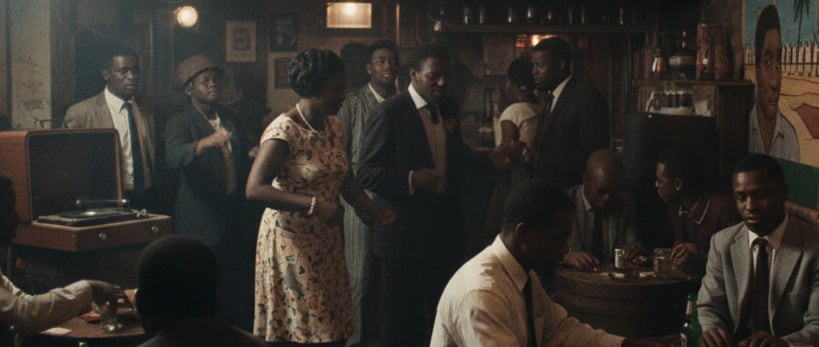
The sign on the door read "hours 9-5." It didn't mention those were 9pm to 5am.
Inside, the scene was extraordinary. Poker and kalooki tables stacked with cash. Illegal gambling, drugs, prostitution, after-hours drinking. The clientele mixed white criminals with West Indian hustlers, gay men and women (when homosexuality was still illegal) and members of notorious Notting Hill families.
Fights were brutal and frequent. But never racial.
This was unusual in 1960s London—just four years after the Notting Hill race riots of 1958, when white mobs attacked Caribbean homes and businesses. The Blue Moon operated by different rules.
Shebeens: The Heart of Caribbean Notting Hill
The Blue Moon wasn't alone. Across Notting Hill—particularly around the Colville area, All Saints Road and Portobello Road—West Indians opened shebeens.
Named after the Irish tradition of unlicensed drinking establishments, shebeens were completely illegal venues. They charged around 2 shillings and sixpence entrance, selling Red Stripe beer at the same price. While The Blue Moon operated in a grey area with questionable licences, shebeens existed entirely outside the law.
But they were more than drinking dens. They were survival spaces where Caribbean culture, music and connection could flourish away from police harassment and racist hostility. These venues would later contribute to the birth of Notting Hill Carnival—Europe's largest street festival celebrating Caribbean heritage.
The Americano: When Competition Met Violence
A short walk from The Blue Moon, on St Ervan's Road near Golborne Road, another Jamaican entrepreneur called Dizzy opened The Americano.
Good music. Welcoming atmosphere. Word spread fast in the tight-knit Caribbean community of North Kensington.
Customers started leaving The Blue Moon for Dizzy's place.
Roy Edwards wasn't pleased.
One Night on St Ervan's Road
A Ford Anglia pulled up outside The Americano. Four men got out: two Blue Moon staff and two local white criminals—Frank Chopin and Bill Sykes M.
They smashed the place to pieces. They stabbed Dizzy in the top of the head.
Dizzy never reopened. He went back to Kensal Green, choosing what one account calls "an easier life."
The Blue Moon had made its point about territory.
Understanding Caribbean Club Culture in Context
This violence wasn't random criminality. It was economic warfare.
In 1960s Britain, Caribbean immigrants faced:
"No Blacks, No Irish, No Dogs" signs on housing
Systematic employment discrimination
Police harassment and racist policing
The 1958 Notting Hill race riots
Exclusion from legitimate business opportunities
The club scene—from licensed establishments like The Blue Moon to illegal shebeens—became one of the few ways West Indian entrepreneurs could build economic independence. These weren't just entertainment venues. They were territorial assets worth protecting.
The attack on The Americano involved Black and white criminals working together—showing that in the underworld, alliances sometimes crossed the racial lines that divided the streets above.
Police Persecution and Disproportionate Justice
The Blue Moon eventually fell to constant police raids. The pattern was familiar across Caribbean-run establishments in Notting Hill—from Frank Critchlow's El Rio and Mangrove to countless unnamed shebeens.
Noel Walsh got three and a half years in prison for possessing a small amount of cannabis. Many believed the evidence was planted, payback for that Liverpool shooting years earlier.
This was the reality of Black British life in 1960s London: building community spaces while facing relentless state persecution.
From Shebeens to Carnival: The Legacy
The same community that fought these territorial battles also:
Sheltered each other during the 1958 race riots
Created safe spaces at venues like Totobags (later The Number 9 on Blenheim Crescent)
Launched Notting Hill Carnival in 1966 as an act of cultural resistance
Built the foundation for Caribbean heritage in modern Britain
Places like The Blue Moon, The Americano and the countless shebeens across Notting Hill weren't just clubs. They were acts of survival and resistance.
Walk The Frontline: February 2025
This February, join us for The Frontline: Black Shebeens & Resistance in Notting Hill—a new heritage walk exploring the hidden history of Caribbean club culture in 1960s North Kensington.
We'll stand outside that basement door on Blenheim Crescent where The Blue Moon operated. We'll walk to the site where The Americano stood. We'll explore the streets where shebeens created Caribbean community in hostile territory. We'll visit the sites of the Mangrove, El Rio and other establishments that formed the social infrastructure of Black British life.
This isn't sanitised history. It's the real story of Caribbean resilience, economic survival and cultural resistance in the face of systematic racism.
Join the waitlist now for a special £7.50 early bird ticket when bookings open in February 2025.
Discover Authentic Caribbean Heritage in Notting Hill
At Notting Hill Walks, we tell the stories guidebooks leave out. Our Caribbean heritage tours are led by guides who centre community voices and rigorous historical research. From the Windrush generation to Notting Hill Carnival, from shebeens to resistance—we explore the real history of Black British life in West London.
Related walk: Notting Hill Caribbean Heritage Walk
Contact
QUESTIONS? REACH OUT ANYTIME
hello@nottinghillwalks.co.uk
© 2025. All rights reserved.
Partners


Notting Hill Walks is part of More Curricular alongside Hidden Tudors Tours